Article and photos courtesy of Taichung City Government Information Bureau
Translated by Anna Yang
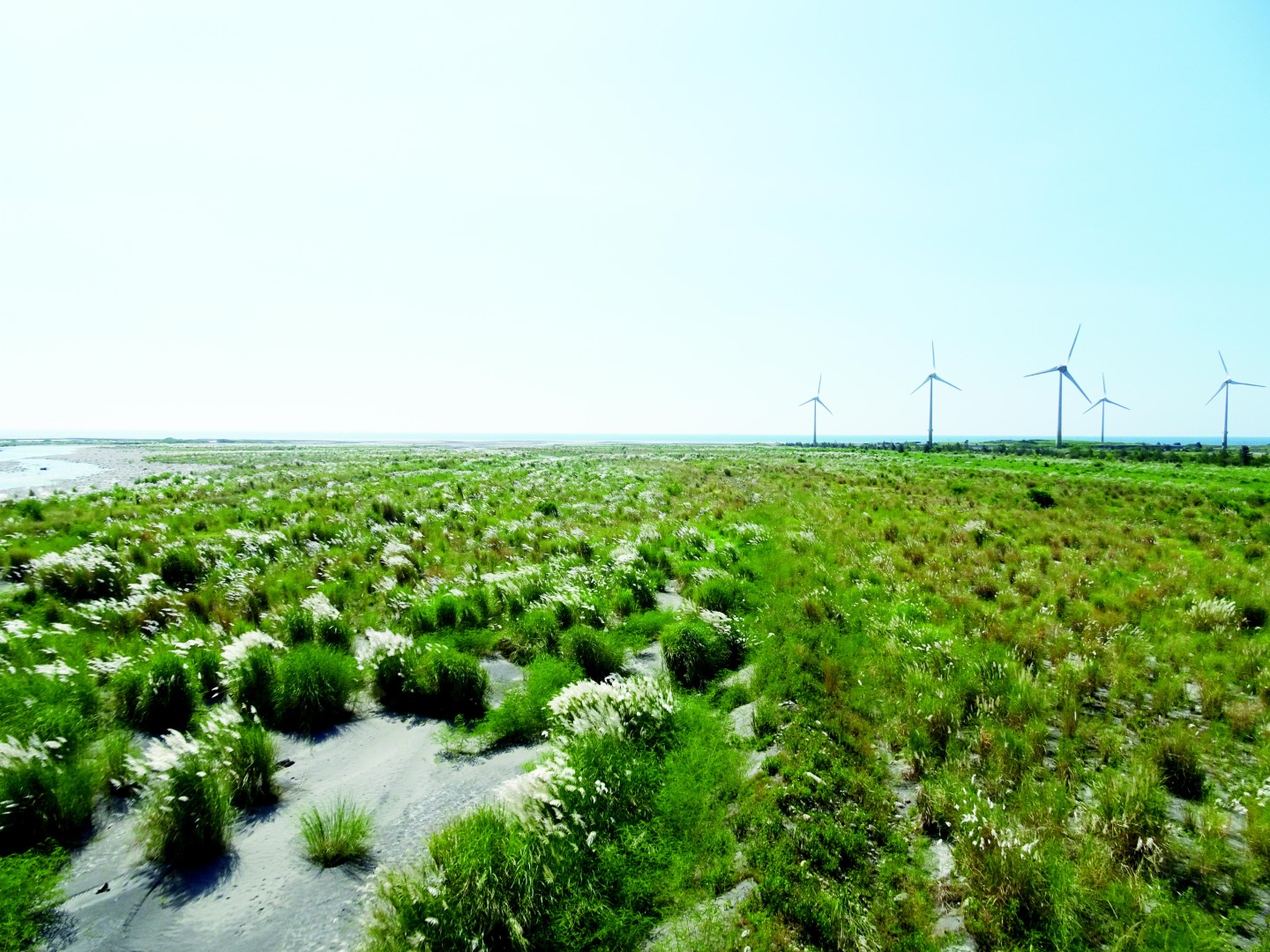
Cultivating plants on bare land reduces dust in the air.
Each year between October and April, the seasonal monsoon winds shift from the southwest to northeast due climatic factors that include off-shore high pressure systems and dense fog coverage. When conditions become almost windless and pollutants become less diffuse, western Taiwan’s overall air pollution increases, which can easily result in high PM2.5 (fine particulate matter) concentrations that are not dispersed.
There are many sources of air pollution. Besides climatic conditions and topographical factors, Taichung’s population has continued to increase every year and various industries have seen development, leading a growth in vehicles. Besides vehicular and industrial emissions, there are other common man-made sources of pollution, such as construction work.
Scooter-emissions checkpoints are used
periodically to regulate vehicular pollution
emissions.
Taichung City Government active against air pollution
As Taiwan’s second-largest city, Taichung has seen the number of gasoline-powered two and four wheeled vehicles increase with population growth, with vehicle emissions accounting for 29% of this city’s PM2.5 pollution. To combat this, Taichung City Government is actively promoting subsidies for the replacement of old scooters with electric ones, power-charging stations, bus-ride discounts (free bus rides for up to 10 kilometers, with an added NT$10 charged for distances beyond this), the iBike 2.0 Plan, and the pedestrian-friendly market events. All of these initiatives are designed to improve the city’s air quality.
Pedestrian-friendly market events help reduce
vehicle emissions.
In regards to controlling fugitive emissions (random escaping pollutants), the city government maintains strict limitations on public construction in accordance with the principle of “manage the public environment as a top goal, follow up on inspections of private industries”. Taichung City Government also conducts inspections of public land in river basin areas to prevent dust pollution, and as a part of efforts to reduce local incense and joss paper (spirit money) burning. Between January and July this year, a total of 1,830 metric tons of joss paper was collected for a consolidated processing service (with joss paper being burned together at one time), the highest-ever for this period, for a total 4.46 metric ton reduction of PM2.5.
This diagram shows the average PM2.5 concentration in Taichung City from January to September
Taichung Power Plant is the most serious fixed source of air pollution and the city government continues to proceed with a close eye on its goal of reducing coal usage by 40% within four years. Taichung City Government is demanding that Taipower dismantles four older generators if it wants to install two new generators and will fine the power plant if it fails to comply. The city government is also encouraging the replacement of all coal-fired plants with natural gas (LNG) powered ones. To date, Taichung has seen a reduction of coal-fired plants from 80 to 17 and, by 2022, all coal-fired plants are to be terminated.
aichung City Government is strictly demanding that Taichung Power Plant dismantles four older generators if it wants to install new ones, in addition to reducing coal-burning by 40%.
In the fall and winter, western Taiwan’s air quality drops significantly and special measures initiated by Taichung City Government in advance include notifications to the top 30 fixed pollution sources to reduce pollution output, the boosting of pollution inspections focused on burning in public spaces and high-polluting vehicles, and notifications to schools to adjust outdoor activity schedules. In order to help maintain resident health conditions, the city government has adopted two major strategies–“direct penalties” and “aggravated punishments”–for those do not comply with relevant laws and regulations, doubling and tripling financial penalties when necessary.
Comparison chart of air quality indicators between January and September from 2011 to
2019 in Taichung City
Low carbon emissions enhance good air quality
Taichung has made many efforts to improve air quality and statistics indicate that, from January to September this year, the average PM2.5 concentration in the city has improved by 2.0 micrograms compared with the same period last year. The Air Quality Index (AQI) of Taichung City has mostly been rated green (good), in a great year-on-year improvement. During the same period, the cumulative number of unhealthy orange (AQI>100) days has decreased by about 40%, setting a new record low for the past nine years. All this demonstrates that air quality continues to improve with everyone’s help and efforts.
The Daily Air Quality Forecast Video
Clip broadcasts air-quality conditions
for people before they go out.
What is PM2.5?
There are many kinds of air pollutants and fine particulate matter (PM) in the air is classified as being a size equal to or smaller than 2.5μm.
This fine particulate matter enters our bodies via the nose and respiratory system. Any particulate matter with a size above 10μm can be eliminated via our nostrils, but other smaller particulate matter may be absorbed into the body. In recent years, many epidemiologists have confirmed that PM2.5 pollutants directly affect our health conditions by causing bronchitis, asthma, cardiovascular disease, and even lung cancer. Anyone who’s exposed to pollutants in the air environment for both long and short periods of time will experience a higher risk for respiratory disease and death.
Protecting yourself during the air-pollution season
As the seasonal monsoon arrives, many sensitive groups, including the elderly and children, need to check the daily air quality before heading out. Decreasing outdoor activities and wearing masks are ways to prevent the inhalation of polluted air. In addition, if you stay indoors, it’s recommended that you close windows to reduce being exposed to particulate matter. When you enter the house, always remember to sanitize your hands, wash your face and clean your nose.
台中市政府新聞局/文.圖提供 楊翰雯/譯
於裸露高灘地進行植栽作業,減少裸露面積,有效抑制揚塵
每年10月至隔年4月,季節風向由西南風轉為東北風,受到高壓出海或籠罩等氣象因素,在幾乎無風、背風等擴散不佳的狀態下,造成臺灣西半部地區整體的空氣污染物累積,易有細懸浮微粒(PM2.5)濃度偏高及不利擴散情形。
空污來源很多,除了氣候條件及地形因素,臺中人口數逐年成長,帶動各項產業建設,工廠數、車輛數隨之成長,轄內環境負荷也日益增加。在人為排放部分,除了大家常見的工業來源之外,車輛、工程等所造成的污染排放量也不小。
機車排氣不定期路邊攔檢作業及
加強烏賊車青白煙檢驗
市府多管齊下 鐵腕抗空汙
台中市已躍昇為台灣第二大城,燃油汽機車總數隨人口增加逐年成長,交通工具汙染排放占全市PM2.5排放量29%。市府積極推動加碼老舊機車汰換補助、推廣電動車輛充(換)電站、雙十公車優惠措施、iBike2.0倍增計畫、試辦市集攤販樂活徒步區等政策,多管齊下改善空氣品質。
逸散源管制方面,市府依「先公後私」原則,持續加嚴管制公共工程防制效率,針對河川公有地聯合稽查,防制揚塵汙染;另也持續推廣減量燒香、紙錢集中燒,並提供紙錢載運預約服務,今年1至7月共收運紙錢約1830公噸,歷年同期最高,共減少PM2.5達4.46公噸。
中火是台中空汙最嚴重的固定汙染源,市府持續嚴正要求中火落實生煤自治條例所規定的4年減煤4成;另要求若中火未來增設2部燃氣機組,在新燃氣機組運轉前,要將等同發電量的4部燃煤機組除役或拆除,達成汰舊換新,否則將加重處罰。此外亦鼓勵業者汰換生煤工業鍋爐,改用燃氣鍋爐,目前全市工業燃煤鍋爐已從80多座降至17座,並要求民國111年前全數停止運轉。
秋冬季台灣西半部空氣品質不佳,市府提前啟動應變措施,通報前30大固定汙染源降載、派員加強汙染稽查、巡查露天燃燒、高汙染車輛查緝,並通報機關學校單位調整戶外作息。為維護市民健康,市府針對汙染防制措施未符相關法規之單位,採「直接開罰、加重處罰」兩大策略,加重處罰2至3倍。
「低碳陽光好空氣」空品提升看得見
台中為改善空氣品質不遺餘力,統計數據顯示,2019年1至9月臺中市PM2.5平均濃度值較去年同期改善2.0微克;而從空氣品質指標(Air Quality Index, AQI)來看,臺中市空氣品質良好(綠色)等級逐年大幅提升,AQI>100之敏感族群不健康(橘色)等級累積天數較去年同期減少約4成,創下近9年新低;顯示在市府及市民的共同努力下空氣品質持續改善中。
臺中市細懸浮微粒(PM2.5)平均濃度值1至9月同期比較圖
什麼是PM2.5?
空氣中存在許多污染物,其中漂浮在空氣中類似灰塵的粒狀物稱為懸浮微粒(particulate matter, PM),粒徑小於或等於2.5微米(μm)的粒子,就稱為PM2.5,通稱細懸浮微粒。
空氣中的懸浮微粒會經由鼻、咽及喉進入人體,10微米以上的微粒可由鼻腔去除,較小的微粒則會經由氣管、支氣管經肺泡吸收進入人體內部。近年來,許多流行病理學研究已確立PM2.5對於健康造成影響,包括:支氣管炎、氣喘、心血管疾病、肺癌等,無論長期或短期暴露在空氣污染物的環境之下,皆會提高呼吸道疾病及死亡之風險。
空汙季節自我防護
空汙季節來臨,對於敏感族群或老人、小孩等抵抗力較弱者,外出前可先查閱空氣品質情形,做好減少戶外劇烈活動及配戴口罩等自我防護措施。居家方面建議適當關閉窗戶,以減少細懸浮微粒之暴露;由室外進入室內時,可加強個人衛生防護,例如洗手、洗臉、清潔鼻腔,維持身體健康狀態。
臺中市100年至108年空氣品質指標分布1至9月同期比較圖
「每日空氣品質預報影片」 播報空氣品質分區預報,供民眾外出評估查詢